Barale Fratelli
Vineyards at the heart
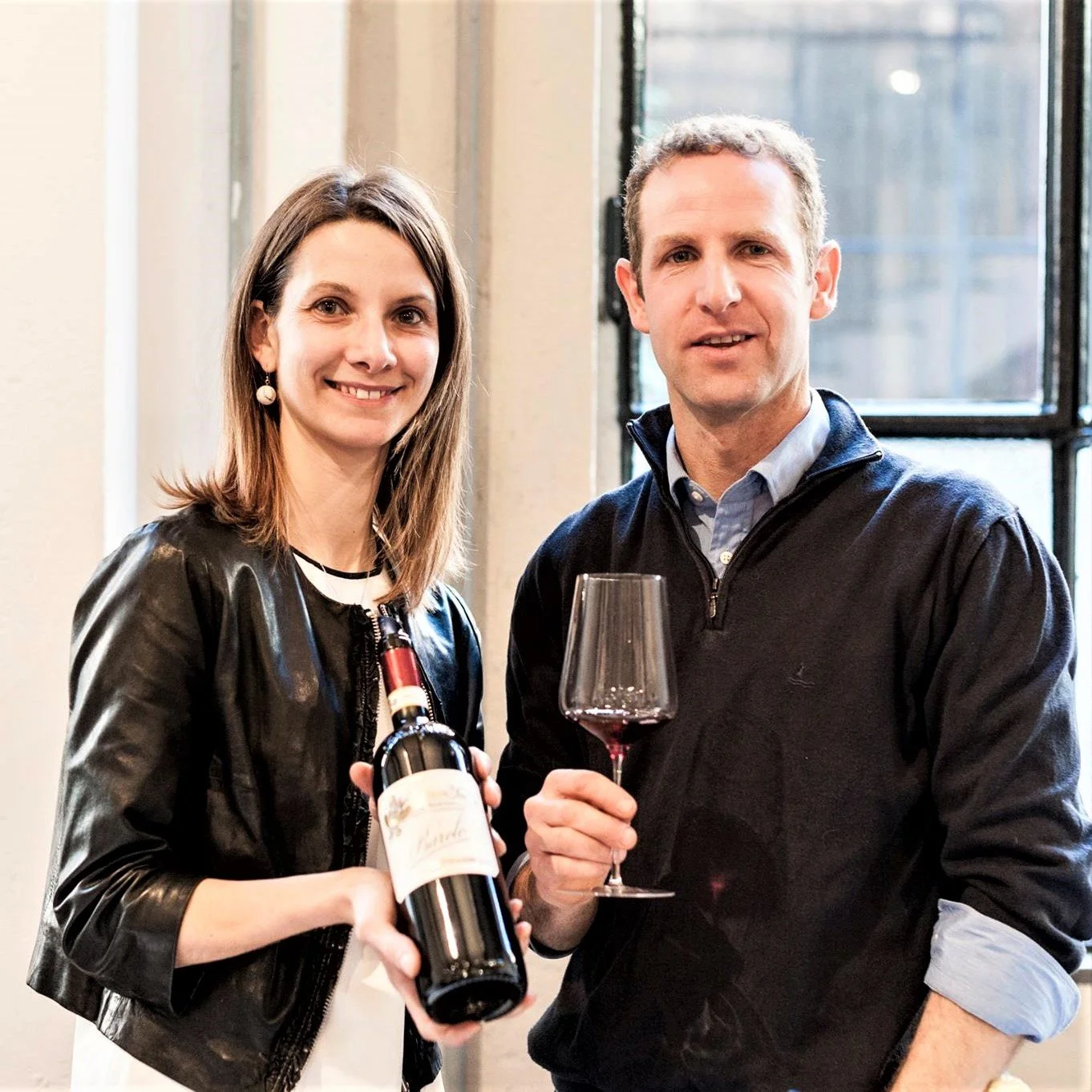
The Barale family have, in fact, been at it for centuries, and while they are amongst the first recorded producers of Barolo wine, from 1870, they appear in the village register of the early 1600s as owners of parts of some pretty familiar vineyard names; Coste di Rose, Cannubi, Castellero and Preda. The current custodians, Sergio Barale and his daughters Eleonora and Gloria owe their heritage to the acquisition, over generaons, of vineyards in not only Barolo comune but also in Monforte d’Alba and Barbaresco. By the 1970s, the family had brought more Cannubi and added Monrobiolo (in Barolo) and some Bussia (in Monforte). In the 90s, they had virtually swapped their long-held Rabaja vineyard in Barbaresco for some Serraboella in Neive. All this covers only 20 ha, with Sergio tailoring his platings almost precisely to the best soil and aspect combinations. Virtually the whole of Cannubi was replanted at the end of the 2007 vintage, and although just back in production, it’s with startling results. Vineyards are everything to Barale.
Natives of Barolo
On the edge of Barolo village, just a few metres down and across the cobblestones of the via Roma from Cantina Bartolo Mascarello is the unprepossessing cantina frontage to one of the jewels of Barolo. It’s not as though Barale has just emerged. Still, these firmly traditional wines are now being made to the full potential of the family’s remarkable vineyards, and this unforced, traditional style is now being fully appreciated.
Barale presents a catalogue of superb, authentic Barolo and a cru Barbaresco, bell-clear Piemontese varietals, Nebbiolo, Barbera and Dolcetto, along with a slight twist in the form of a wonderful metodo classico - as good a sparkler as I've ever had in Italy. Another great asset is a wonderful, typically far-sighted museum collection, an archive of the last 2 decades of Barale winemaking. Oh, and that Chinato, all elegance, fragrant and addictive.

Winemaking
-Certified Organic
-Hand-harvested and sorted
-Destemming and soft crushing of the grapes
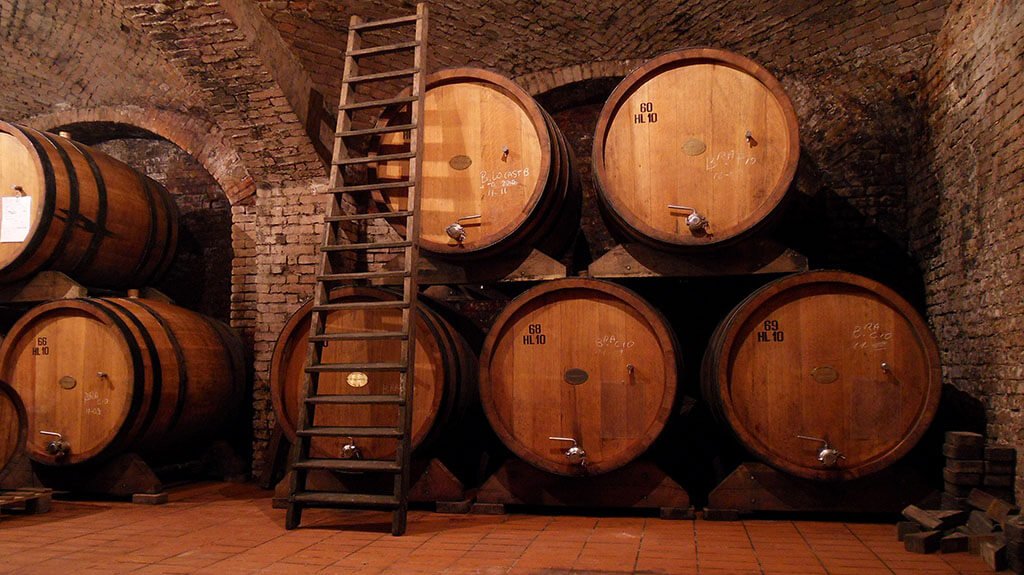
-Fermentation with indigenous yeasts, controlled temperature and maceration with frequent basting of the skins.
-Steel ferments, temperatures around 25°C and one week of maceration.
Metodo Classico
-Fermentated for 30-40 days in stainless steel temperature-controlled at 16 °C.
-Cold stabilized, the wine matures for 11 months in temperature-controlled stainless steel tanks.
-Secondary fermentation in bottle, with the addition Chardonnay must. 15 grams of dosage.
-Aged on lees for a minimum of 24 months before disgorging.
-Remuage is done by hand on classic pupitres riddling racks. Disgorgement in small quantities.
Langhe Nebbiolo
-Fermented and macerated for 10 – 15 days
-Aged for 6 months in Tonneaux.
Barbera d’Alba Superiore ‘Castlé’
-Fermented and macerated in stainless steel tanks for one week
-Aged for 9 months in 500 L Tonneaux.
Dolcetto d’Alba ‘Le Rose’
-Fermented and macerated in stainless steel tanks for 8 days
-Aged briefly in 15-30 hL oak barrels
Barbaresco Serraboella
-Fermented and macerated in oak casks for 15-30 days
-Aged for 24 months in 15-30 hL Allier French oak barrels
-Aged in bottle for at least 12 months.
Barolo del Comune di Barolo, Monrobiolo, Castellero & Bussia
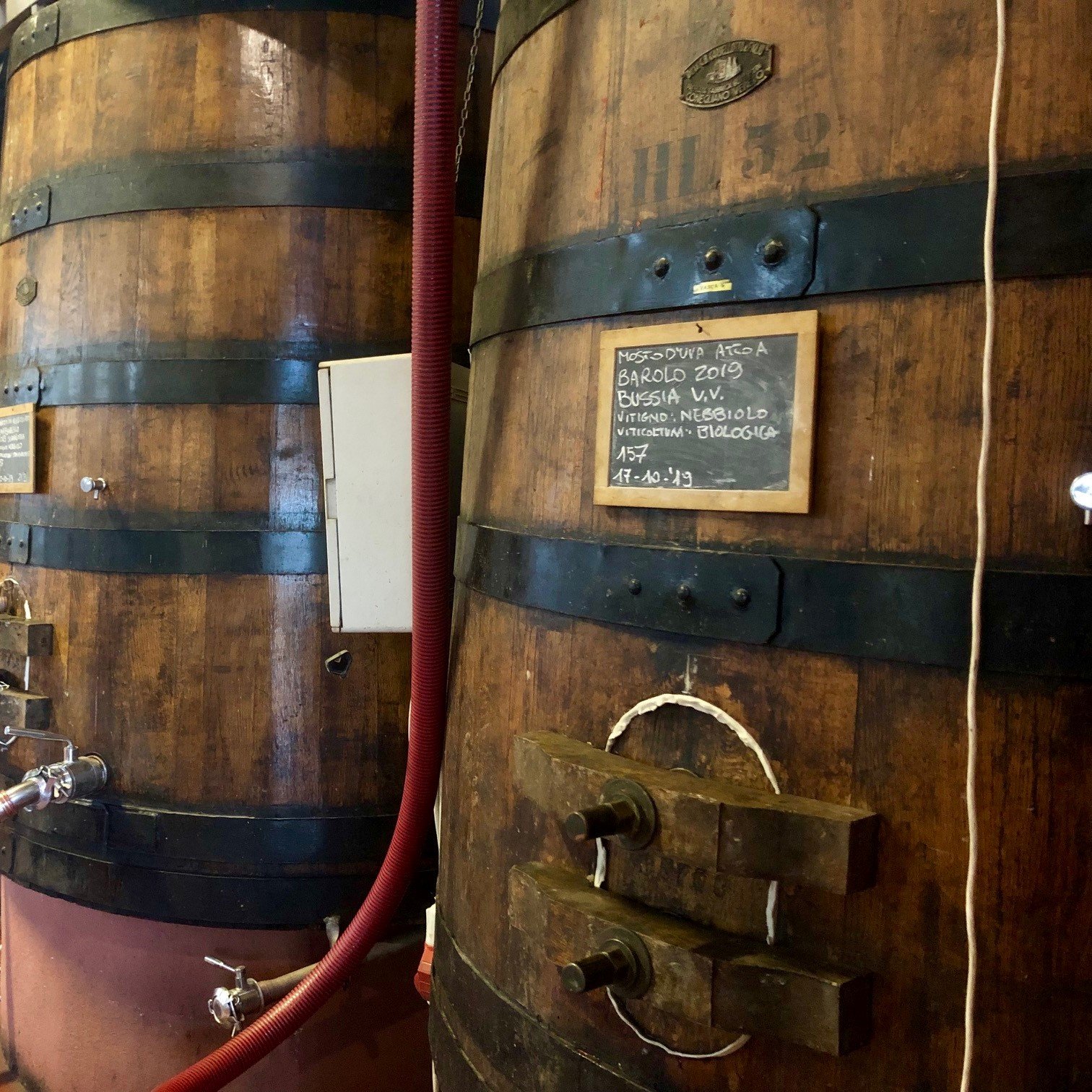
-Fermented and macerated in oak casks for 30 days
-Aged for 30 months in 15-30 hL Allier French oak barrels
-Aged in bottle for at least 12 months.
Chinato
-Aged for at least 10 years
-Fortified to 17% ABV
-Aromatised with the family’s original recipe of China Calissaja bark, Rhubarb root, Gentian and other aromatic herbs
-Aged for a year in 700 L oak barrels before bottling
| Wine | Region/ Comune | Varieties | Soil Type | Altitude |
|---|---|---|---|---|
| Metodo Classico | Barolo | Chardonnay, Pinot Noir | Calcerous, Sandy Loam | 220 |
| Langhe Nebbiolo | Barolo, Coste di Rose vineyard. | Nebbiolo | Calcerous, Sandy Loam | 250 |
| Barbera d'Alba Superiore | Barolo and Monforte d’Alba | Barbera | Calcareous, silty clay loam composition | 270 |
| Dolcetto d'Alba Le Rose | Monforte d’Alba. | Dolcetto | Silty clay loam | 300 |
| Barolo del Comune di Barolo | Barolo, Castellero, Preda and Coste di Rose vineyards | Nebbiolo | Saint Agata Fossil Marl; calcareous with silty clay loam. | 250-270 |
| Barolo Bussia | Monforte d’Alba, Bussia Soprana vineyard | Nebbiolo | Saint Agata Fossil Marl; calcareous with silty clay loam. | 270 |
| Barolo Castellero | Barolo, Castellero vineyard | Nebbiolo | Saint Agata Fossil Marl; calcareous with silty clay loam. | 270 |
| Barolo Monrobiolo | Barolo, Monrobiolo vineyard | Nebbiolo | Saint Agata Fossil Marl; calcareous with silty clay loam. | 280 |
| Chinato | Barolo, Castellero vineyard | Nebbiolo | Saint Agata Fossil Marl; calcareous with silty clay loam. | 270 |

The Barale family have in fact been at it for centuries and while they are amongst the first recorded producers of Barolo wine, from 1870, they appear in the village register of the early 1600s as owners of parts of some pretty familiar vineyard names; Coste di Rose, Cannubi, Castellero and Preda. The current custodians, Sergio Barale and his daughters Eleonora and Gloria owe their heritage to the acquisition, over generations, of vineyards in not only Barolo comune, but also in Monforte d’Alba and Barbaresco.
In the winery; delicate crushing in order to keep skins intact, fermentation with indigenous yeasts, 40 days of maceration. Aged for three years in French oak.
-
‘This is actually one of my favorite Bussia wines of the vintage, thanks to its precision and definition. The greater Bussia vineyard seems to show uneven results in 2017, but the Barale Fratelli 2017 Barolo Bussia Sergio Barale holds it all together. You'll find lots of dark fruit and plum. This Barolo is also contoured by a metallic note of mineral or rust that adds to its sharpness. Etched to the point of being chiseled, this wine should develop nicely in time.’ Monica Larner
-
Region - Barolo
Comune - Monforte d’Alba
Variety - Nebbiolo
Vineyard - Bussia

The Barale family have in fact been at it for centuries and while they are amongst the first recorded producers of Barolo wine, from 1870, they appear in the village register of the early 1600s as owners of parts of some pretty familiar vineyard names; Coste di Rose, Cannubi, Castellero and Preda. The current custodians, Sergio Barale and his daughters Eleonora and Gloria owe their heritage to the acquisition, over generations, of vineyards in not only Barolo comune, but also in Monforte d’Alba and Barbaresco.
In the winery; delicate crushing in order to keep skins intact, fermentation with indigenous yeasts, 10 days of maceration. Aged for one year in 500 litre tonneaux.
-
Region - Barolo
Comune - Barolo
Variety - Nebbiolo
Vineyard - Coste di Rose

The Barale family have in fact been at it for centuries and while they are amongst the first recorded producers of Barolo wine, from 1870, they appear in the village register of the early 1600s as owners of parts of some pretty familiar vineyard names; Coste di Rose, Cannubi, Castellero and Preda. The current custodians, Sergio Barale and his daughters Eleonora and Gloria owe their heritage to the acquisition, over generations, of vineyards in not only Barolo comune, but also in Monforte d’Alba and Barbaresco.
In the winery; delicate crushing in order to keep skins intact, fermentation with indigenous yeasts, 40 days of maceration. Aged for three years in French oak.
-
From the Monrobiolo vineyard within the Barolo commune (just across from Mondorte) planted to ancient Nebbiolo clones (Michet, Rosè and Lampia). Classic Barolo aromas of fragrant red cherry, crushed raspberry, and Turkish Delight shape the nose along with blood orange, caramelised mushrooms, 12-year-old Balsamico di Modena, and a whiff of ferrous boot polish. Firmly structured and savoury, it has an almost weightless concentration, delivering raspberry compote, ripe Morello cherry, and graphite. Velvety dark chocolate tannins provide support, while the fresh cranberry acidity preserves balance - Marcell Kustos, Wine Pilot
-
Region - Barolo
Comune - Barolo
Variety - Nebbiolo
Vineyard - Monrobiolo di Bussia